

13 Sep Mahkota by-election: Glitter or gold for Umno?
Fittingly, the constituency of Mahkota in Johor serves as an opportunity for Malaysia’s beleaguered grand old party to showcase its improving, potentially glittering electoral fortunes.
After the Nenggiri victory in Kelantan, Umno is confident that “it’s electorally back”.
It is highly likely that Umno will be able to continue to claim this narrative in the coming by-election for which the campaign officially begins tomorrow.
The electoral trends favour Umno winning the seat convincingly against Bersatu, a party that has been beaten up in by-elections in the past year.
Johor remains politically dominated by Umno even as its support over time has significantly eroded. As will be shown below, Umno has a core base of support in this seat, although support has contracted over the last three elections.
As such, Umno should not be overconfident. The results could also point to important current trends – anger among non-Malays for provocative statements made by youth leaders that are branding the party as intolerant and racist, disappointment with the government for not protecting the interests of non-Malays and unable to address the persistent cost of living and concerns with the quality of governance locally and nationally.
Johoreans are pragmatic voters who have an electoral history of using elections to send clear messages.
At the state level, the by-election will bring to the fore that Umno has not respectfully cooperated with Pakatan Harapan, maintaining and sidelining them as the formal opposition in the state.
As such, Umno should not take Harapan supporters for granted. Harapan won significantly higher support than Umno in the 15th general election, 44 percent compared to 29 percent in what was then a three-cornered contest.
Umno should not also take Madani cooperation among parties for granted currently, as old acrimonies at the grassroots levels run deep and there is disappointment with Umno not adequately supporting Harapan in post-GE15 by-elections as well. Having to “give” the seat up does not sit well with many in Harapan.
This piece looks at voting trends, showing that Umno is favoured to win this contest even as there are vulnerabilities.
The test of where Umno is politically – whether it is really back electorally – will not be in a win, but in the majority and composition of the results. Umno will still depend heavily on non-Malays for support – if they come out to vote.
Turnout trends: Beware of voters staying home
Mahkota is a multi-ethnic urban/semi-urban seat with 54 percent Malays, 36 percent Chinese, eight percent Indians and two percent of other communities, including those from Sabah and Sarawak.
As such, ethnic patterns in voting are revealing. The findings from the past three polls – the 14th general election, state election 2022 and GE15 – show that voting of all ethnic communities matters and has been changing.
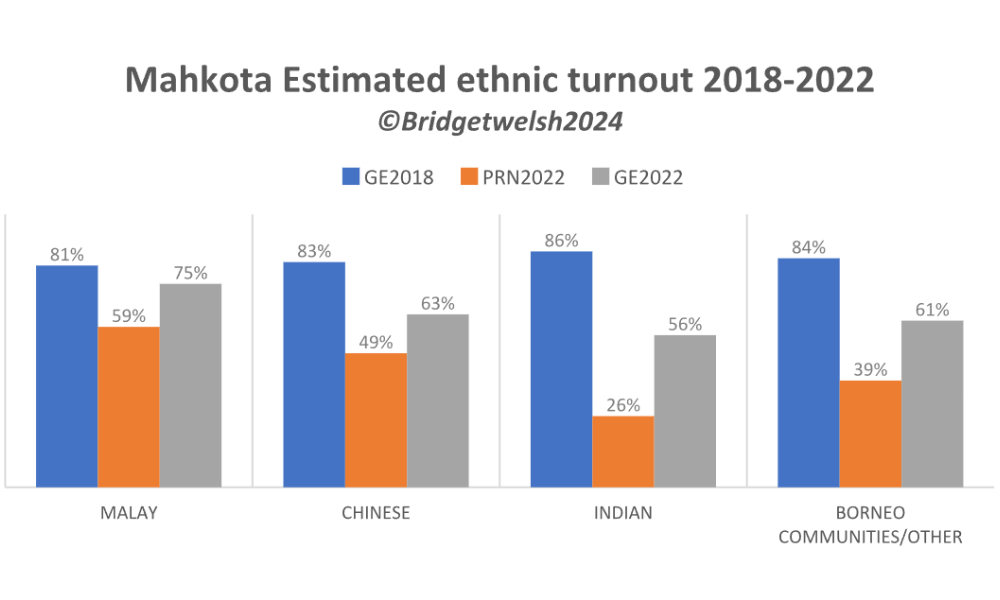
Regarding turnout, the state election did not draw voters to the polls to the same degree, an issue that this by-election may face.
The trends also show lower voter turnout among non-Malays. Only an estimated 56 percent of Indians turned out to vote in GE15, for example, up 30 percent from the state election months earlier.
Voters in Mahkota have stayed home before and may stay home again. The thresholds where turnout could negatively impact the result for Umno have to reach those of the state election of March 2022.
From an age cohort lens, the data shows that voters in their 30s are least likely to vote. It is this group that is often based in Singapore or elsewhere working and cannot afford the time and expense to return.
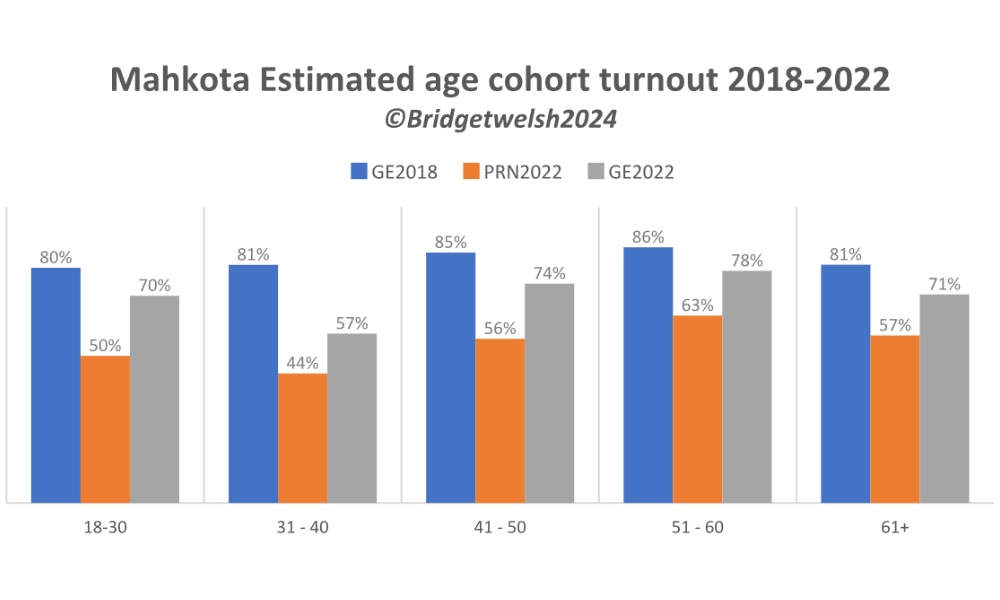
This is the group to watch this election and this cohort may choose to stay home. As will be shown below, this age cohort is also among those most likely to swing their vote to Perikatan Nasional.
Voter turnout of non-Malays and older voters from the 40s onward, Umno’s traditional base, is needed for the party to secure a decisive victory.
Voting support trends: Umno needs allies
Unlike in Nenggiri where the outcome was determined by Umno alone, in this contest, they will depend on cooperation and support from Harapan.
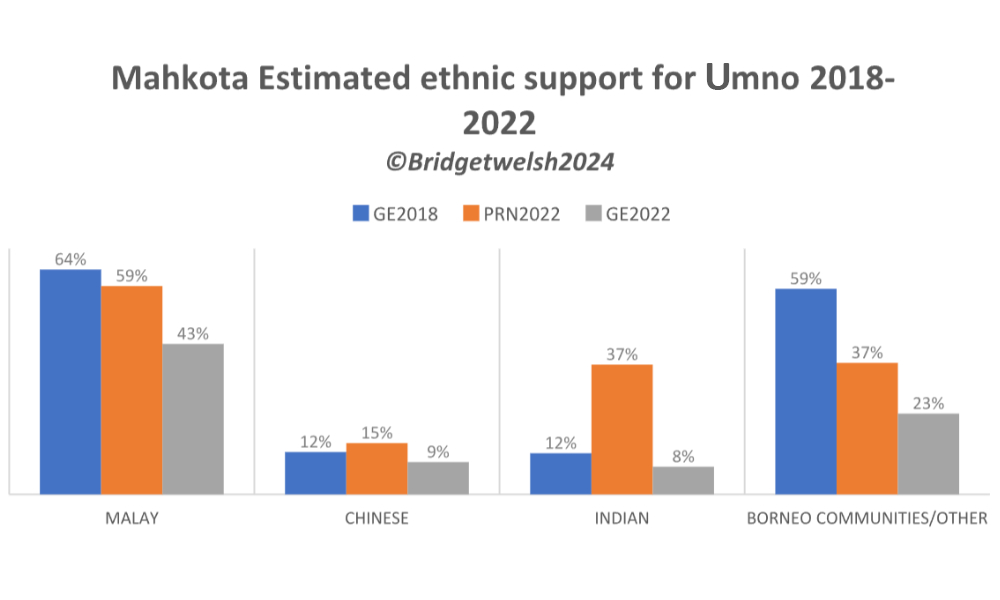
The reason is clear. Umno had its political base decimated. Malay support has dropped an estimated 21 percent from 2018 to 2022 over the three elections. Non-Malay support is not high, reaching only an estimated 15 percent among Chinese and an estimated 36 percent among Indians in the state election, a poll where then-menteri besar Hasni Mohammad’s leadership was popular across communities.
This contest will test the support of the current state leadership by Menteri Besar Onn Hafiz Ghazi. The ethnic voting trends show that Umno cannot secure the victory on its own.
The estimates of age cohort voting patterns of support for Umno show that the party’s deficit is especially concentrated among younger voters. They will need a large boost from younger voters, notably those who voted for Harapan.
The drop in the last general election, led by the still very unpopular Umno president Ahmad Zahid Hamidi, was significant.
Data suggests that the calls for Umno Youth chief Dr Muhamad Akmal Saleh to stay away from the campaign should include the party president as well, in light of the devastating negative electoral impact he caused.
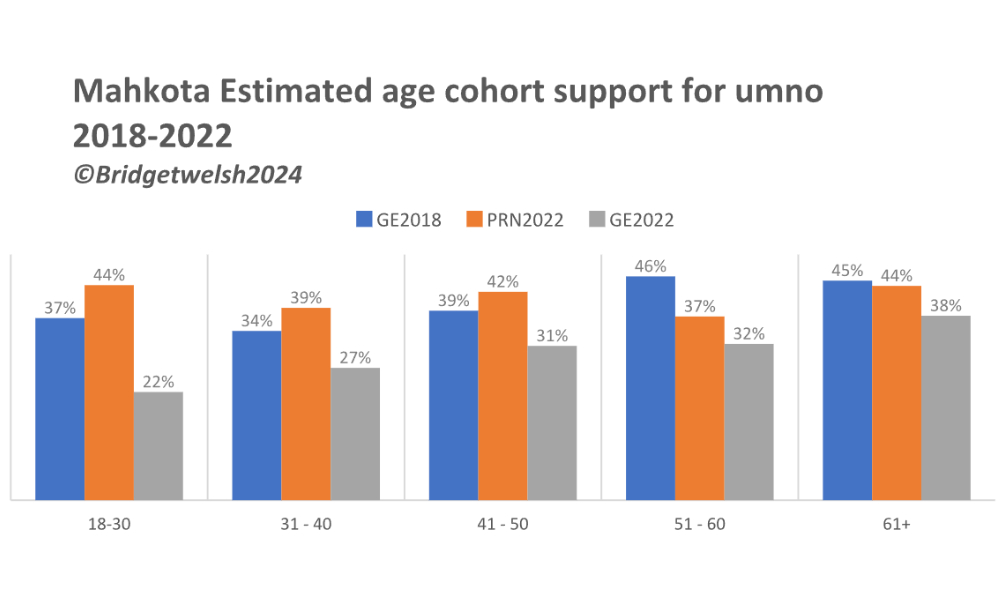
The findings also show that PN won more younger voters than Umno in GE15. Umno’s base in this constituency is only among a core third of the electorate, with the highest range reaching only into the 40 percent mark, revealing a significantly weaker party than in the past.
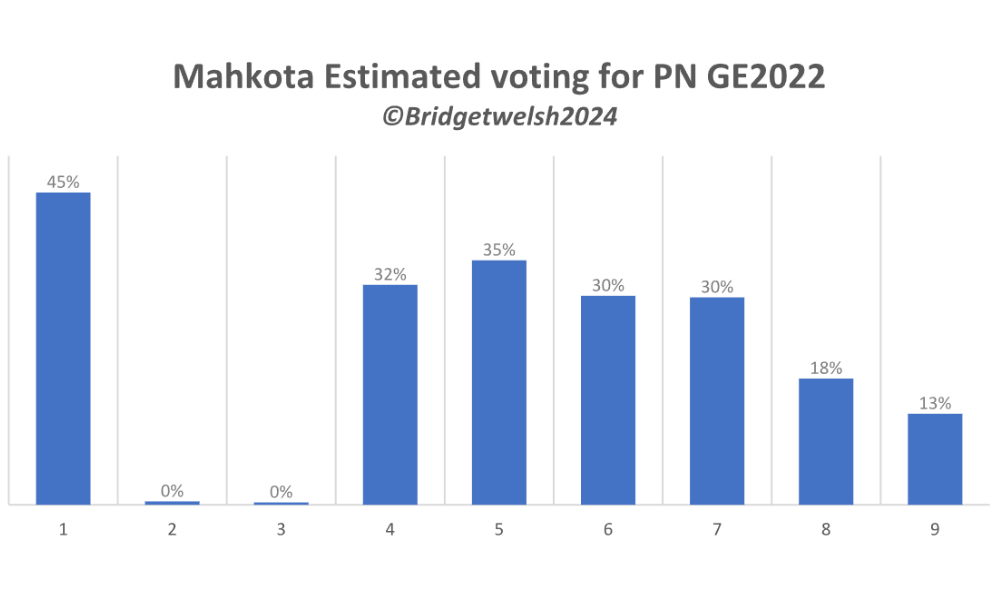
PN has made headway only among Malays, capturing the most Malays in the last election and is poised to do so in this contest – depending on whether Malay supporters of Harapan move their support to Umno.
A key group to watch in the electoral outcome will be the military vote in this constituency which has had interesting vote swing over the last three elections, recently in 2022, advantaging PN.
PN’s problems remain in winning non-Malays. The speeches at the PAS muktamar this week, which highlight intermarriage and point to assimilation rather than a fundamental respect of non-Malay identity and difference through their faith and language are not likely to win over non-Malay support.
It is impossible to win respect from a community when you fail to recognise their rights, a long-standing issue nationally and evident in voting trends. Bersatu will have its work cut out for it to make non-Malay inroads in support.
Economic drivers: Cost of living matters
The Mahkota constituency presents a very different context than Nenggiri for Umno. It is urban/semi-urban and has wider socio-economic divisions. Cost of living issues are prominent and discussed heavily among pragmatic Johoreans who are facing steeper costs than some other parts of the country.
The Department of Statistics Malaysia puts the mean household income at RM6,174 – with the mean household expenses at RM3,878. This does not leave much disposal income for families in Mahkota at a time when inflation and high prices resonate intensely.
Umno has traditionally relied on less economically well-off voters for support in Mahkota with household incomes less than RM5,000, drawing from my fieldwork on the ground in this constituency and voting estimates.
This support has eroded over the last three elections. For Umno, this election will be about what it can deliver for voters, many of whom are struggling to make ends meet and disenchanted will all the parties on offer. Economic discontent favours the opposition.
Unlike in Nenggiri where the campaign could have the personal touch and promise more development, in the urban and semi-urban setting of Mahkota, these forms of campaigning are not easy to replicate.
In this way, the Mahkota by-election contest is a fundamentally different test, a different electoral barometer.
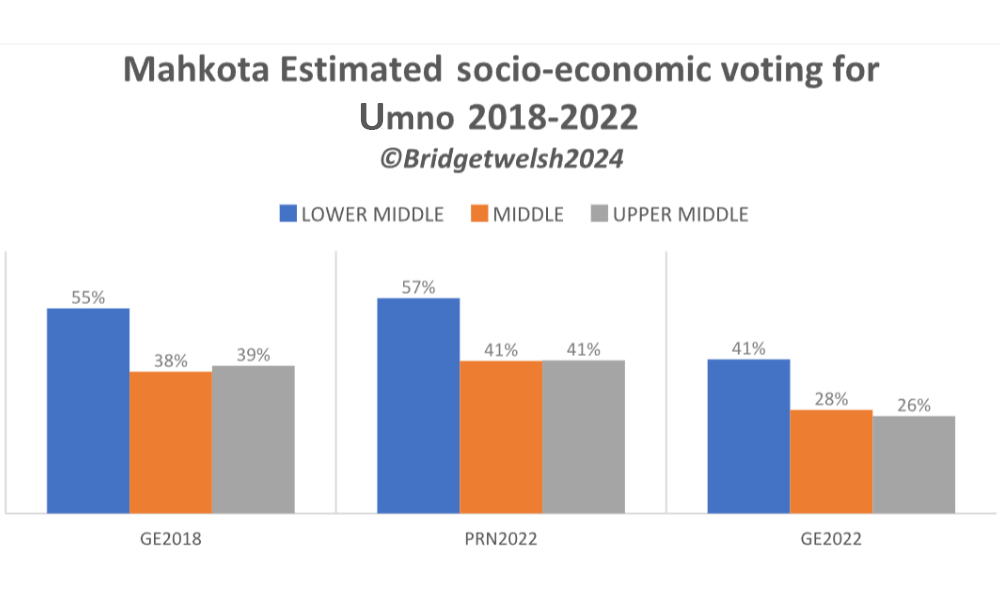
For Umno, a win in Mahkota will be needed to maintain its momentum. A win will show that it has support from Harapan voters, who are increasingly frustrated with some of Umno’s leaders.
For PN, gains in Johor – in Umno’s heartland – are the aim. Bersatu is facing electoral decline and is hoping to turn this around. Johor is also Bersatu’s base so this poll is important for this party’s future.
The campaign runs for two weeks and is expected to be hard-fought on all sides. The campaign will matter, as it has in all recent by-elections. Johor and the Mahkota results have shown that voting trends can and do change.
Despite Umno being heavily favoured, the key question will be which crowns are won electorally among different communities and whether Umno’s win is just glitter or real gold. It remains to be seen whether the party is genuinely returning to electoral strength.
First published on Malaysiakini.